Every quarter, governments around the world release a number that dominates headlines, shapes elections, and determines budget priorities. That number is GDP growth. It tells us how fast economies are expanding. What it does not tell us is how healthy, how safe, how fed, how housed, or how mentally well the people living inside those economies actually are. That silence is not a measurement gap. It is a political choice. And the public health consequences of that choice are now playing out across every major domain of human life, from what we eat and where we live to how we breathe, work, and access care when we fall ill. This article examines five distinct ways in which the GDP growth public health capitalism relationship is producing a world that is simultaneously wealthier and sicker.
The argument is not that economic growth is inherently harmful. It is that growth measured solely through GDP, and pursued by a capitalist system that externalises social and environmental costs while privatising profits, is producing predictable, documented, and largely avoidable damage to public health at a global scale. The evidence base for this argument has never been stronger than it is in 2026, drawn from The Lancet, the WHO, the FAO, and dozens of peer-reviewed institutions worldwide.
Why GDP Growth Alone Cannot Measure Human Health
Gross Domestic Product was designed in the 1930s as a wartime accounting tool. Even its primary architect, the economist Simon Kuznets, warned explicitly that the welfare of a nation could scarcely be inferred from a measurement of national income. That warning was embedded in the original work and was immediately ignored. GDP became the universal yardstick of national success, and the capitalist political economy reinforced this choice: GDP is largely composed of consumer spending, approximately 60% in most high-income countries, which means the system must encourage people to spend more, which means they must earn more, which means they must work more, which means they have less time to cook, rest, parent, volunteer, or exercise. Each of these sacrifices has a measurable public health cost. None of them appear in the GDP number.
A landmark 2024 review published in The Lancet Planetary Health by Jansen, Wang, Behrens, and Hoekstra at Leiden University confirmed what public health researchers have long suspected: while GDP correlates with wellbeing at low income levels, this relationship flattens and eventually disappears as countries grow wealthier. The paper demonstrates that long-term growth rates of happiness and income are not statistically significantly linked. GDP does not capture inequality, environmental health, or the intrinsic value of health and community. A country can increase its GDP by producing more cigarettes, ultra processed food, and pharmaceuticals to treat the resulting diseases. Every step adds to the number. None of it constitutes genuine human progress. (Jansen A et al., Lancet Planetary Health, 2024, doi:10.1016/S2542-5196(24)00147-5)
Domain One: Food Quality and the Ultra Processed Food Crisis
The most visible arena where GDP growth capitalism is destroying public health is the food system. In November 2025, The Lancet published the most authoritative scientific review of ultra processed food (UPF) and human health ever assembled. The three-part series, led by Professor Carlos Monteiro of the University of São Paulo and built on 104 peer-reviewed studies, confirmed that UPFs have globally displaced traditional whole food dietary patterns. In the United States and United Kingdom, they now account for approximately 55 to 60% of total daily calorie intake. The Lancet data revealed that between 1962 and 2021, more than 50% of the US$2.9 trillion in shareholder payouts distributed by all food sector corporations went to UPF manufacturers alone. The profit motive, not nutritional value, now governs what the world eats.
The health consequences are systemic. Meta-analyses of prospective studies link high UPF intake to obesity, type 2 diabetes, hypertension, cardiovascular disease, coronary heart disease, cerebrovascular disease, chronic kidney disease, depression, and all-cause mortality. A 2025 study across nine European countries covering 428,728 participants found UPF consumption associated with all-cause mortality and mortality from circulatory diseases, ischemic heart disease, digestive diseases, and Parkinson’s disease. An April 2025 meta-analysis in The American Journal of Preventive Medicine found that each 10% increase in UPF share of total calorie intake raised premature all-cause mortality risk by 3%. (Monteiro CA et al., The Lancet, 2025, doi:10.1016/S0140-6736(25)01565-X)
Food inflation compounds this crisis. The State of Food Security and Nutrition in the World 2025, produced by the FAO, IFAD, UNICEF, WFP, and WHO, found that approximately 2.6 billion people worldwide could not afford a healthy diet in 2024, defined at a global average cost of just US$4.46 per person per day. Elevated food price inflation has undermined purchasing power particularly among low-income populations, pushing families toward cheaper, shelf-stable ultra processed alternatives. In low-income countries, food price inflation peaked at 30% between mid-2022 and mid-2023. Sub-Saharan Africa’s healthy diet affordability worsened for a second consecutive year in 2024. The capitalist food system is structured to make unhealthy eating cheap and healthy eating expensive: this is not a market failure. It is a market performing exactly as designed. (FAO, IFAD, UNICEF, WFP, WHO. SOFI 2025. FAO, Rome.)
Domain Two: Mental Health and the Burnout Economy
In October 2024, UN Special Rapporteur on extreme poverty and human rights Olivier De Schutter released a landmark report titled The Burnout Economy: Poverty and Mental Health. It described how growth-obsessed capitalism is generating a tidal wave of mental ill-health globally, disproportionately among people in poverty, informal employment, and precarious work. De Schutter noted that while 970 million people, approximately 11% of the global population, experience a mental health condition, those on lower incomes are up to three times more likely to suffer depression, anxiety, and other common mental illnesses than those with the highest incomes. “Our obsession with growth has created a burnout economy,” he wrote, “a race to increase the profits of a tiny elite in which millions of people have been made too sick to run.” (De Schutter O., UN Human Rights Council, October 2024)
A peer-reviewed paper by Robert Noonan published in Health Promotion International in 2024 makes the mechanism explicit. Because GDP is largely consumer spending, capitalism requires people to keep spending, therefore keep working, therefore have less time for autonomous activities that sustain health: cooking, exercising, maintaining social bonds, sleeping adequately, and engaging in meaningful leisure. This produces what the paper calls time poverty, and research consistently shows that long working hours and time poverty have adverse impacts on life satisfaction, mental health, and physical health. A global study cited in Noonan’s paper found that overwork contributes to over 700,000 stroke and ischaemic heart disease related deaths every year. In Great Britain alone, almost one million cases of work-related stress, depression, or anxiety were recorded in 2022 to 2023, resulting in an estimated 17 million working days lost. These deaths and lost days do not subtract from GDP. The healthcare spending they generate actually adds to it. (Noonan RJ., Health Promotion International, 2024, doi:10.1093/heapro/daae090)
Domain Three: Environmental Health and the Fossil Fuel Subsidy Paradox
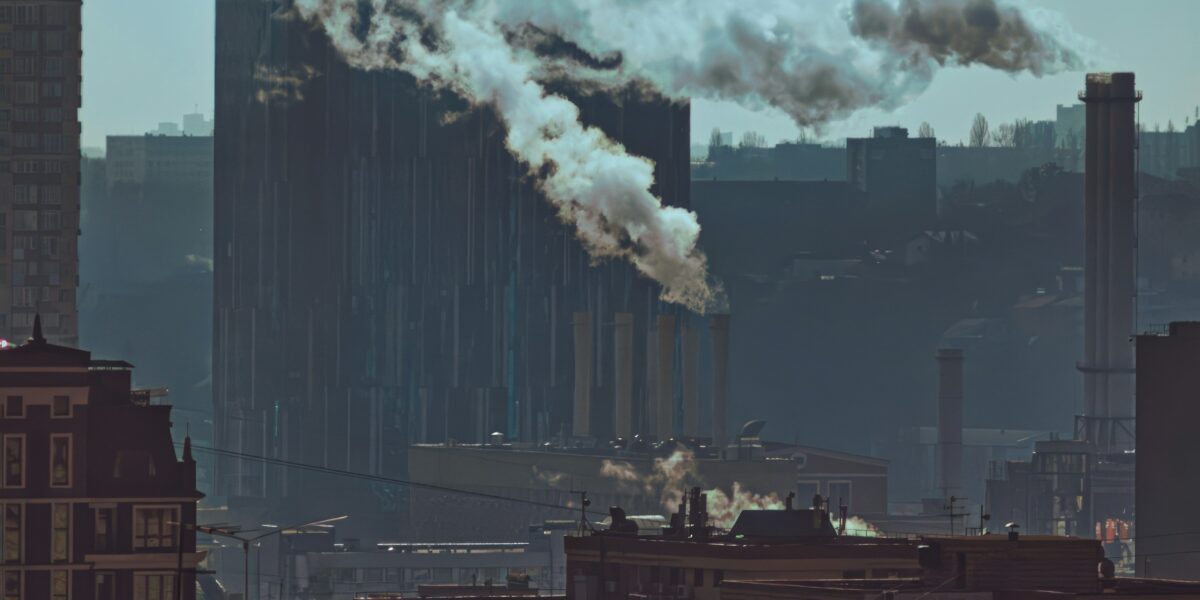
The third domain where GDP-driven capitalism is systematically undermining public health is the environment. The 2025 Report of the Lancet Countdown on Health and Climate Change, produced by 128 experts from 71 institutions worldwide in collaboration with the WHO, found that continued reliance on fossil fuels led to an estimated 2.52 million deaths from fossil fuel-derived outdoor air pollution and an estimated 2.3 million deaths from dirty fuel-derived household air pollution in 2022 alone. These represent preventable deaths caused not by ignorance but by deliberate policy: governments globally spent US$956 billion on net fossil fuel subsidies in 2023, more than triple the annual amount pledged to support climate-vulnerable countries. Fifteen countries worldwide spent more subsidising fossil fuels than on their entire national health budgets. (Lancet Countdown on Health and Climate Change, 2025 Report, lancetcountdown.org)
The IMF calculates that global fossil fuel subsidies, including environmental externalities, reached US$7 trillion or 7.1% of GDP in 2022. These subsidies exist because fossil fuel industries are embedded in the GDP growth architecture: they power factories, fuel transport, and generate the energy consumption that registers as economic activity. Transitioning away from them is treated by growth-focused governments as an economic risk, even though the Lancet Countdown demonstrates the transition creates health co-benefits. An estimated 160,000 premature deaths were avoided every year between 2010 and 2022 from reduced coal-derived air pollution alone. The energy transition is not just an environmental project. It is the largest preventable public health intervention available to governments, and it is being delayed by the same GDP accounting system that counts the deaths from air pollution as healthcare revenue.
Domain Four: Healthcare Commodification and the Out-of-Pocket Crisis
Perhaps nowhere is the contradiction between GDP growth and public health more visible than in healthcare financing. The capitalist logic applied to healthcare treats it as a market: services are provided where profit can be extracted, prices are set by supply and demand, and access is determined by purchasing power. The WHO’s Global Health Expenditure data, analysed in a 2025 Human Rights Watch report, found that out-of-pocket costs financed more than 20% of the healthcare system in 126 countries in 2022, seven more countries than the previous year. In 55 countries in 2022, out-of-pocket payments were the primary source of healthcare financing, surpassing all other funding including public spending and foreign assistance combined.
The WHO documents that in 2022, three out of four people among the poorest populations globally faced financial hardship from health costs, compared with fewer than one in 25 among the richest. The WHO estimates that nearly 100 million people are pushed into poverty each year specifically due to out-of-pocket health expenses. A systematic review covering this issue found that privatisation of healthcare “often results in increased inequity in the accessibility of health care and greater out-of-pocket expenditures,” as former UN Special Rapporteur on the right to health Anand Grover documented. The healthcare system, under market capitalism, is not designed to keep people well. It is structured to profit from illness while restricting access to prevention and early treatment among those who cannot afford to pay. Out-of-pocket health costs are regressive: they consume a far larger share of income from the poor than from the wealthy, deepening existing health inequalities. (WHO, UHC Fact Sheet, December 2025; Human Rights Watch, April 2025)
Domain Five: Housing Commodification and Its Health Consequences
Housing is among the most fundamental social determinants of health. A 2025 Lancet Public Health Series paper by Bentley, Mason, Jacobs, and colleagues from the Universities of Melbourne and Harvard documented that the UN estimates between 1.6 and 3 billion people worldwide have unsafe, inadequate, or unaffordable housing. Poor housing conditions are associated with respiratory and cardiovascular diseases, mental health conditions, infectious disease transmission, and injury risk. Cold indoor conditions are associated with high blood pressure, respiratory conditions, and depression. Damp and mould increase the risk of asthma. Overcrowding facilitates infectious disease transmission. Insecure tenure increases mental health disorders. Eviction is associated with depression, stress, hospital readmissions, food insecurity, and adverse birth outcomes in children whose parents face eviction. (Bentley R et al., Lancet Public Health, 2025, doi:10.1016/S2468-2667(25)00142-2)
The housing crisis is inseparable from the financialisation of the housing market under capitalism. When housing is treated primarily as an investment asset rather than a social good, prices are driven upward by speculative demand, mortgage finance, and landlord accumulation. The result is that an increasing share of the population spends more than 30% of household income on rent or mortgage payments, a threshold associated with housing stress and its cascading effects on diet, healthcare access, mental health, and child development. The commodification of shelter, like the commodification of food and healthcare, extracts economic value from populations while simultaneously degrading their health. GDP grows. Life expectancy, mental wellbeing, and housing security do not keep pace.
The Common Logic Across All Five Domains
Across food, mental health, environment, healthcare, and housing, the same structural logic operates. Profit is extracted from the provision of goods and services that are fundamental to human health. The costs of that extraction, including disease, pollution, stress, and insecurity, are externalised onto individuals, families, and public health systems. GDP captures the economic activity of the extraction but not its human costs. Governments, optimising for GDP growth, maintain the policies that make extraction profitable: fossil fuel subsidies, weak UPF regulation, healthcare market liberalisation, housing financialisation, and labour market deregulation that intensifies overwork and economic insecurity. The result is a system that is structurally incapable of producing the public health outcomes it nominally claims to value.
A January 2025 paper in The Lancet Planetary Health by Kalis, Hickel, O’Neill, Jackson, Victor, Raworth, and colleagues reviewed the post-growth science literature and concluded that societies must replace GDP growth as the terminal governing objective with the explicit goal of human wellbeing within planetary boundaries. The paper documents how GDP-focused policy has generated deepening inequality and environmental breakdown while leaving the determinants of genuine health systematically neglected. This is not a fringe academic argument. It is supported by the WHO, the UN, and an expanding body of Lancet research. (Kalis G et al., Lancet Planetary Health, 2025, doi:10.1016/S2542-5196(24)00310-3)
What You Can Do: Protecting Your Health Inside a System Designed Against It
The structural forces described in this article are large. Individual action alone cannot substitute for systemic change. But within the system as it currently exists, these evidence based steps protect health across the domains described above.
- Reclaim your time deliberately. Overwork is not personal failure. It is a structural pressure. Within your constraints, treat sleep, physical activity, social connection, and unstructured rest as non-negotiable health investments. The public health evidence shows these have a stronger impact on wellbeing and longevity than most clinical interventions.
- Learn to identify ultra processed food. If an ingredient list contains emulsifiers, artificial flavours, hydrolysed proteins, or modified starches, it is ultra processed. Building meals around whole or minimally processed ingredients, even in small steps, reduces exposure to the most evidence-linked dietary drivers of chronic disease.
- Know your healthcare rights. In countries with public health systems, understand what is covered and insist on accessing it. In countries with predominantly private systems, compare out-of-pocket costs for preventive care against emergency care: prevention is almost always cheaper. Advocate for workplace health insurance and community health resources.
- Make indoor air quality a priority. Open windows daily when outdoor air quality permits. Reduce indoor use of fossil fuel-burning appliances. Avoid paraffin candles, aerosol sprays, and synthetic air fresheners. These are not luxury adjustments: indoor air quality in poorly ventilated homes is frequently worse than outdoor air in polluted cities.
- Treat housing insecurity as a health emergency. If you or someone you know faces rent stress consuming more than 30% of income, or housing insecurity through precarious tenancy, connect with available legal aid, tenant rights organisations, housing support charities, and social services. Housing insecurity is a clinical risk factor for depression, cardiovascular disease, and child developmental harm.
- Engage politically. The five crises described in this article are maintained by specific policies that specific governments implement or fail to implement. Your vote, your community organising, your engagement with local government, and your participation in civil society are the mechanisms through which systemic change becomes possible.
Suggestions for Policymakers: What Genuine Health-Centred Governance Looks Like
1. Adopt Wellbeing Budgeting to Supplement GDP
New Zealand’s Wellbeing Budget model and the UN’s Valuing What Counts initiative provide workable frameworks for governing across multiple goals simultaneously rather than optimising for a single number. Health, housing security, environmental quality, mental wellbeing, and inequality reduction must be explicit budget targets, not hoped-for by-products of GDP growth. The Lancet Planetary Health review by Jansen and colleagues provides a ready-made conceptual framework for integrating wellbeing, inclusion, and sustainability into national accounting systems. Without this shift, every other policy intervention below operates inside a governance architecture that economically rewards the behaviours that damage health.
2. Regulate Ultra Processed Food with Legal Force
Mandatory front-of-pack warning labels identifying ultra processed food status, not merely nutrient content, must be introduced globally. Marketing of ultra processed food to children must be restricted by law, particularly on digital platforms. Ultra processed food must be banned from schools, hospitals, and government institutions. Fiscal policy should tax selected ultra processed food categories and redirect revenue to subsidise fresh food access for lower income populations. Brazil’s school feeding programme, legally mandating 90% fresh or minimally processed food by 2026, is the model.
3. Invest in Universal Healthcare on a Non-Commercial Basis
The WHO’s standard for safe healthcare financing requires out-of-pocket costs to remain below 15 to 20% of total health expenditure. Currently, 126 countries exceed this threshold. Governments must commit to expanding public health financing, reducing reliance on user charges, and resisting further privatisation of primary and preventive care. In low and middle income countries, international financing mechanisms must be substantially strengthened, not withdrawn, as the post-2025 geopolitical trend of foreign aid reduction threatens to reverse decades of progress in health system strengthening.
4. Redirect Fossil Fuel Subsidies to Health and Clean Energy
The IMF and Lancet Countdown converge on the same analysis: the US$7 trillion in annual fossil fuel subsidies are simultaneously a fiscal burden, a climate accelerator, and a public health crisis. A phased elimination of these subsidies, with revenue redirected to universal healthcare, urban air quality programmes, clean energy access, and worker transition support, would represent the largest possible return on public health investment. It is politically difficult. It is technically straightforward. Every year of delay is measured in millions of preventable deaths.
5. Regulate Working Hours and Strengthen Labour Protections
The evidence linking overwork to cardiovascular disease, depression, burnout, and premature death is robust and well-established. Governments must enforce maximum working hour limits, require adequate rest periods, protect the right to disconnect from digital work communication outside contractual hours, and extend these protections explicitly to gig economy and informal workers who are currently outside their scope. The UN Special Rapporteur’s 2024 report argues that addressing the burnout economy requires not just labour regulation but a fundamental rethinking of the relationship between social protection and economic productivity metrics.
6. Treat Housing as Public Health Infrastructure
Governments must expand public and social housing supply, introduce rent stabilisation mechanisms in markets experiencing housing stress, enforce minimum habitability standards with meaningful penalties, and specifically address the health consequences of eviction by strengthening tenant protections. The Lancet Public Health Housing Series argues that affordability, security, and suitability are the three pillars of healthy housing, and that policy interventions targeting upstream housing system determinants produce more sustained health improvements than downstream interventions in the clinical system trying to treat the consequences. Housing policy is health policy.
Conclusion: Measuring What We Value, or Valuing What We Measure
The five domains examined in this article, food, mental health, environment, healthcare, and housing, are not separate crises. They are expressions of the same underlying logic: an economic system that measures success through GDP growth, externalises costs onto bodies and communities, and privatises the gains. The evidence from Lancet, WHO, FAO, and UN bodies is not ambiguous. GDP growth public health capitalism is a dysfunctional combination that produces predictable, measurable, and largely avoidable human suffering at a global scale. The solutions are not radical. They are simply the application of what public health science already knows to the governance decisions that shape the environments in which people live. Wellbeing budgeting. Food regulation. Public healthcare. Clean energy. Labour rights. Affordable housing. None of these require dismantling economies. They require redirecting economies toward the thing economies are supposed to serve, which is human beings living well.
Primary Sources:
- Jansen A, Wang R, Behrens P, Hoekstra R. Beyond GDP: a review and conceptual framework for measuring sustainable and inclusive wellbeing. Lancet Planetary Health. 2024;8(9):e695-e705. PMID: 39243785. doi:10.1016/S2542-5196(24)00147-5
- Monteiro CA, Louzada MLC, Steele-Martinez E et al. Ultra-processed foods and human health: the main thesis and the evidence. The Lancet. 2025;406(10508):1154-1170. doi:10.1016/S0140-6736(25)01565-X
- FAO, IFAD, UNICEF, WFP, WHO. The State of Food Security and Nutrition in the World 2025. Rome: FAO; 2025. doi:10.4060/cd6008en
- De Schutter O. The Burnout Economy: Poverty and Mental Health. Report of the UN Special Rapporteur on extreme poverty and human rights. UN Human Rights Council, October 2024.
- Noonan RJ. Extrinsic goals benefit capitalism but not wellbeing: rethinking the economy’s goal for a healthier future. Health Promotion International. 2024;39:daae090. PMC11424164. doi:10.1093/heapro/daae090
- Romanello M et al. Lancet Countdown on Health and Climate Change: 2025 Global Report. University College London and WHO, October 2025. lancetcountdown.org/2025-report/
- Bentley R, Mason K, Jacobs D et al. Housing as a social determinant of health: a contemporary framework. Lancet Public Health. 2025;10(10):e855-e864. PMID: 40953578. doi:10.1016/S2468-2667(25)00142-2
- Kalis G, Hickel J, O’Neill DW et al. Post-growth: the science of wellbeing within planetary boundaries. Lancet Planetary Health. 2025;9(1):e62-e78. doi:10.1016/S2542-5196(24)00310-3
Medical Disclaimer: This article is intended for public health education and informational purposes only. It does not constitute medical or dietary advice. Individuals with specific health concerns should consult a qualified healthcare professional. For more information, please visit our medical disclaimer page.


Leave a Comment