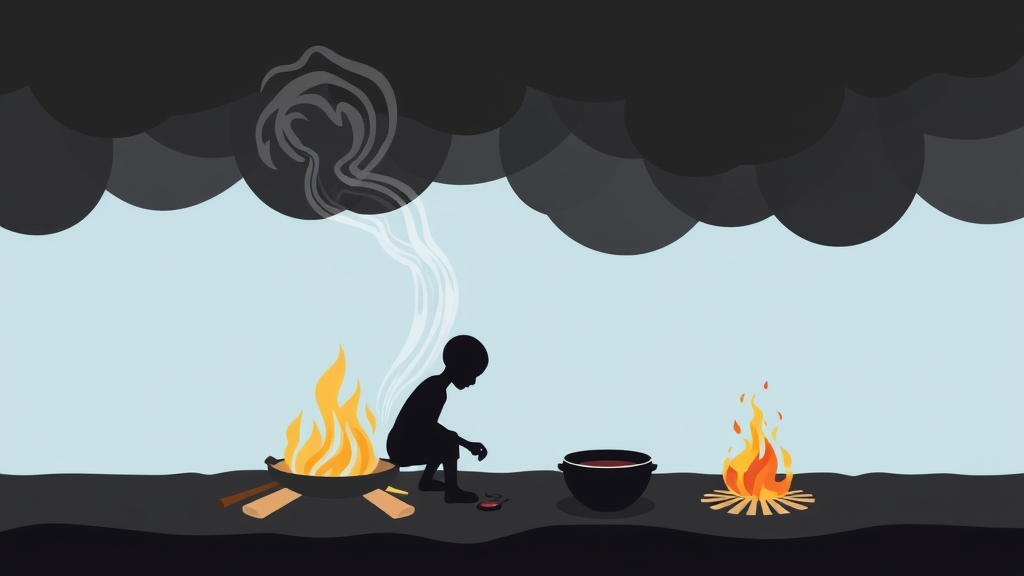
Household air pollution poses a massive health risk. Cooking smoke creates toxic particles inside homes. This is a major problem in rural India. It directly impacts cognitive health and brain development.
Indoor air pollution is a silent killer. Millions of people breathe this smoke daily. Exposure to these toxins causes long-term damage. Therefore, understanding this link is essential for public health.
Key Takeaways
- Cooking smoke contains harmful pollutants.
- Exposure leads to serious cognitive decline.
- Indoor air pollution greatly affects children’s development.
- Simple ventilation can reduce the risk.
The Hidden Danger of Indoor Air Pollution
Indoor air pollution is caused by burning fuels. Rural families often use biomass for cooking. This includes wood, crop residue, and dung. Therefore, the smoke fills the living spaces. This exposure happens continuously. It is a key factor in poor health outcomes.
The smoke contains fine particulate matter. These particles are very small. They enter the lungs easily. Consequently, they enter the bloodstream. This process causes widespread inflammation. This inflammation impacts the entire body, including the brain.
How Smoke Harms Brain Development
The fine particles travel deep into the lungs. They then enter the bloodstream quickly. Toxic chemicals cross the blood-brain barrier. This exposure damages developing neurons. Early life exposure can cause permanent changes. Therefore, cognitive function is severely affected.
Studies indicate a link between pollution and brain structure. For example, research published in The Lancet has found this connection. This research shows that prolonged exposure affects brain development. This damage results in reduced cognitive capacity. Consequently, learning and memory functions suffer significantly.
Magnitude of the Indoor Air Pollution Burden
The burden of indoor air pollution is enormous. In South Asia, millions face this challenge. This pollution affects both mothers and children. Women are often exposed the most. They usually handle the cooking and smoke exposure. This creates a cycle of poor health.
The impact on children is particularly grave. Exposure leads to impaired cognitive development. Children develop slower mental abilities. This damage can affect their ability to learn. Therefore, addressing this pollution is a priority.
Evidence of Cognitive Decline
Research links the exposure to specific neurological effects. For example, studies on rural populations show clear decline. These studies examine the health consequences of poor air quality. The evidence suggests that the pollution disrupts brain function. Moreover, this disruption affects areas responsible for memory and decision-making.
I observe that the gap between known risks and implemented solutions is large. We must move past just noticing the problem to finding effective fixes. The evidence clearly demonstrates the severity of this health hazard. This data supports urgent policy action.
Finding Solutions for Better Indoor Air Quality
Because indoor air pollution is widespread, solutions must be practical. Simple changes can significantly reduce exposure. Families can implement better cooking practices immediately. These steps focus on reducing smoke generation. Therefore, families can start protecting their health today.
Practical Steps for Families
- Use cleaner cooking fuels.
- Install proper ventilation systems.
- Improve indoor air circulation.
Switching to cleaner fuels reduces smoke output. This lessens the exposure of the family. Furthermore, improving ventilation allows smoke to escape quickly. This protects the indoor environment from toxins.
Policymakers must also focus on energy access. They should promote clean energy solutions in rural areas. This addresses the root cause of the pollution. Furthermore, investment in housing can improve ventilation standards. These systemic changes help reduce the burden.
For more information on health systems and data, please consult the World Health Organization. You can find important reports at WHO.
This article is for educational purposes only and does not constitute medical advice, diagnosis, or treatment recommendations. Consult a qualified healthcare provider for any health concerns. See our Medical Disclaimer.
The challenge of indoor air pollution requires a collective effort. By understanding the science, communities can take action. Simple changes in household practices can lead to major health improvements. We must prioritize clean air for all people.
The damage caused by indoor air pollution is real and immediate. Addressing this pollution is a crucial step toward better cognitive health. Families must seek ways to reduce smoke exposure today. This is how we protect the future of rural communities.
Source:
Bhutta et al., The Lancet, 2014.
World Health Organization (WHO) Reports on Indoor Air Quality.
PubMed indexed literature on air pollution and neurodevelopment.


Leave a Comment