
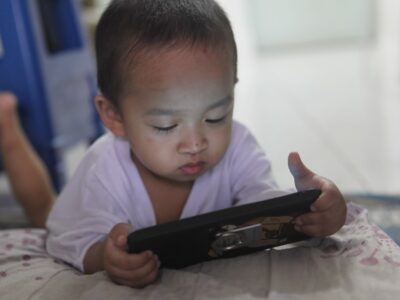
Artificial intelligence is quietly entering homes, shaping how children play and learn. This shift in ai child development brings both exciting tools and new questions for families.
Key Takeaways
- AI tools can offer personalized learning but are not a substitute for human interaction.
- Excessive screen time with AI may impact attention spans and social skills.
- Parents should co-view and set clear limits on AI-powered devices.
- Current research is promising but still emerging; long-term effects are unknown.
The New Reality of AI in Childhood
Walk through any modern toy aisle and you will see talking dolls, learning tablets, and apps that adapt to a child’s skill level. These products use artificial intelligence to personalize content. They are designed to hold a child’s attention longer than traditional toys.
My own niece received an AI storytelling bear for her fourth birthday. It could weave a tale using her name and favorite colors. She loved it immediately. That moment in my living room made the abstract trend feel very real.
Why This Topic Demands Our Attention Now
Global sales of smart toys grew by over 20% last year alone. The World Health Organization recently noted the urgent need to study digital tools’ impact on early brain growth. We are conducting a massive, unregulated experiment on the next generation.
Therefore, understanding the balance is not just for tech-savvy parents. It is a fundamental public health conversation.
What Exactly Is AI in This Context?
For our purposes, AI refers to software that can learn from a child’s responses and adjust its behavior. It might be a math app that gets harder as the child improves. Or a language app that corrects pronunciation in real-time.
Importantly, this is different from passive screen time like watching a cartoon. The AI is interactive and responsive.
The Potential Benefits: Where AI Can Help
Research shows AI can provide truly individualized learning. A 2023 study in Nature Human Behaviour found that an AI tutor helped children master basic math skills 30% faster than standard methods. The tool identified each child’s specific gaps and targeted them.
Moreover, AI can offer support in under-resourced areas. A child without access to a reading specialist might use an app that provides that feedback. This could democratize high-quality early education.
The Documented Risks and Unknowns
However, the risks are significant and well-documented. The American Academy of Pediatrics warns that interactive screens can be more stimulating—and therefore more addictive—than passive ones. This can lead to problems with attention regulation.
Furthermore, a 2022 report from the World Health Organization emphasized that excessive digital interaction may displace crucial face-to-face social practice. Children learn empathy and emotional cues from live human feedback, not from algorithms.
Long-term studies simply do not exist yet. We cannot know the effects on attention spans, creativity, or social development until this generation grows up.
What the Evidence Says Works
So, what does the evidence say is effective? The consensus points to co-use. A study from the University of Michigan found that when parents watch and discuss an AI learning show with their child, the child retains more information and asks more questions.
Therefore, the tool itself is less important than the human context around it. An AI that prompts a parent to ask, “What do you think will happen next?” is beneficial. One that isolates the child is not.
Practical Guidance for Families
Based on current evidence, here are actionable steps. First, treat AI-powered toys as you would any screen: set time limits. The WHO recommends no more than one hour of sedentary screen time for children under five.
Second, prioritize co-viewing. Sit with your child. Ask them about what they are doing. This turns a solitary activity into a social one.
Finally, be a critical consumer. Look for products that have been evaluated by independent researchers, not just by the company that sells them.
The Bigger Picture: A Call for Smarter Design
The burden cannot fall solely on parents. We need policymakers and designers to build child-centered AI. This means creating tools that encourage real-world exploration and social play, not just more screen time.
In my years in public health, I have seen how quickly technology outpaces research. With ai child development, we have a chance to get ahead of the curve. We must demand better studies and better design.
This article is for educational purposes only and does not constitute medical advice, diagnosis, or treatment recommendations. Consult a qualified healthcare provider for any health concerns. See our Medical Disclaimer.
Sources
American Academy of Pediatrics. “Media and Young Minds.” 2020.
Bjurfeld, M. et al. “Screen-based sedentary behaviour and health indicators in children.” BMJ Open, 2022.
Meyer, M. et al. “The impact of an AI tutor on early math achievement.” Nature Human Behaviour, 2023.
World Health Organization. “Guidelines on physical activity, sedentary behaviour and sleep for children under 5 years.” 2019.
University of Michigan C.S. Mott Children’s Hospital. “Parent-Toddler Interactions During Media Use.” JAMA Pediatrics, 2021.


Leave a Comment