
On World Malaria Day 2026, the global health community faces a paradox. Malaria deaths have fallen by more than half since 2000, yet the disease still killed an estimated 608,000 people in 2023, most of them children under five in sub-Saharan Africa. The tools exist to change this. The question is whether the world will deploy them fast enough.
Key Takeaways
- Global malaria deaths dropped from over 897,000 in 2000 to roughly 608,000 in 2023, but progress has stalled and reversed in several high-burden countries since 2019.
- Two WHO-recommended RTS,S and R21/Matrix-M vaccines are now being rolled out across Africa, marking the first time a malaria vaccine has reached children at scale.
- New dual-insecticide nets, seasonal malaria chemoprevention expansion, and next-generation monoclonal antibodies are entering the pipeline in 2025 and 2026.
- Funding gaps, insecticide resistance, and health system fragility remain the primary obstacles to elimination.
Why this year matters
World Malaria Day 2026: the progress, the setbacks, and the new tools that could end malaria is not just a theme. It is a description of where the fight stands. The World Health Organization’s World Malaria Report 2024 confirmed that global case incidence has plateaued at around 249 million cases per year. That number has barely moved since 2019, erasing the steep declines seen in the previous decade. Several countries, including Mozambique, the Democratic Republic of Congo, and Burkina Faso, have reported rising case counts. The WHO’s E-2025 initiative, which aimed to support 25 countries in reaching zero indigenous malaria cases by 2025, has seen mixed results. Bhutan, Belize, and Cabo Verde have made genuine strides. Others have slipped backward.
What struck me about the 2024 data was not the stagnation itself but the unevenness. Some regions are accelerating toward elimination while others are losing ground. That gap tells us the problem is not scientific. It is logistical, financial, and political.
The progress that is easy to overlook
Between 2000 and 2015, the global malaria community achieved something remarkable. Insecticide-treated bed nets, rapid diagnostic tests, and artemisinin-based combination therapies reached hundreds of millions of people. According to Bhatt et al., publishing in Nature in 2015, an estimated 663 million clinical cases of malaria were averted between 2000 and 2015, with insecticide-treated nets accounting for roughly 68 percent of that reduction. That is not a small number. That is more people than live in the entire European Union.
India contributed significantly to this story. The country reported a 66 percent decline in malaria cases between 2018 and 2023, according to data shared by the National Vector Borne Disease Control Programme. States like Odisha, which once accounted for a disproportionate share of India’s malaria burden, have seen sustained reductions through intensified surveillance and community health worker networks. India’s progress matters because it is home to some of the most densely populated malaria-endemic regions on earth.
The WHO’s current global strategy, the Global Technical Strategy for Malaria 2016 to 2030, set targets for reducing case incidence and mortality by at least 90 percent by 2030 relative to 2015 levels. At the current trajectory, the world will miss those targets by a wide margin. The gap between ambition and delivery is the central challenge of World Malaria Day 2026.
Where things are going wrong
Funding is the most visible bottleneck. The WHO estimated that $4.1 billion was invested in malaria control and elimination globally in 2023. The Global Technical Strategy calls for at least $6.8 billion annually by 2030. That shortfall of nearly $3 billion translates directly into nets that are not distributed, diagnostics that are not stocked, and health workers who are not paid.
Insecticide resistance is the quieter crisis. A study by Hancock et al., published in The Lancet Infectious Diseases in 2022, found that resistance to pyrethroids, the only class of insecticide previously approved for bed nets, was detected in 78 percent of the countries reporting monitoring data. When the primary tool loses its edge, transmission rebounds. That is exactly what has happened in parts of East Africa and the Sahel.
Climate change is adding another layer of complexity. Rising temperatures and shifting rainfall patterns are expanding the geographic range of Anopheles mosquitoes into highland areas of East Africa that historically had little malaria transmission. A study by Caminade et al. in Philosophical Transactions of the Royal Society B in 2014 projected that an additional 76 million people could be at risk of malaria in African highlands by 2050 under moderate warming scenarios. We are now inside that window.
Conflict and displacement are compounding everything. In Sudan, the ongoing civil war has devastated health infrastructure in regions that were already malaria hotspots. Displaced populations living in temporary shelters without nets or access to treatment are experiencing case fatality rates that the region had not seen in years.
The new tools arriving in 2025 and 2026
Despite the setbacks, the pipeline of new interventions is stronger than it has been in decades. The most significant development is the rollout of malaria vaccines. The RTS,S vaccine, marketed as Mosquirix, received WHO recommendation in October 2021 and has since been delivered to more than 2 million children across Ghana, Kenya, and Malawi through pilot programmes. In 2023, the WHO recommended a second vaccine, R21/Matrix-M, developed by the University of Oxford and manufactured by the Serum Institute of India. R21 showed 75 percent efficacy over 12 months in phase 3 trials published by Datoo et al. in The Lancet in 2024, and its lower production cost makes large-scale rollout more feasible.
As of early 2026, at least 20 African countries have introduced one or both vaccines into routine immunization programmes. The challenge now is supply. Gavi, the Vaccine Alliance, has committed funding for vaccine procurement, but manufacturing scale-up takes time. The Serum Institute has stated it can produce 100 to 200 million doses annually, which sounds substantial until you consider that the target population across endemic Africa exceeds 25 million births per year.
Next-generation bed nets are another critical advance. Dual-insecticide nets, which combine a pyrethroid with a synergist called piperonyl butoxide or a second insecticide such as chlorfenapyr, have shown significant reductions in malaria transmission in areas with pyrethroid resistance. A large randomized trial in Tanzania, published by Protopopoff et al. in The Lancet in 2018, found that piperonyl butoxide nets reduced malaria prevalence by 44 percent compared to standard pyrethroid nets. The WHO now recommends dual-insecticide nets for deployment in resistance zones, and distribution is scaling up through 2025 and 2026.
Seasonal malaria chemoprevention, which involves giving monthly courses of sulfadoxine-pyrimethamine and amodiaquie to young children during peak transmission season, has also expanded. The WHO recommended its use in areas of highly seasonal transmission across the Sahel in 2012, and coverage has grown from fewer than 300,000 children that year to more than 49 million in 2023. Researchers are now testing year-round chemoprevention in areas where transmission seasons are lengthening due to climate shifts.
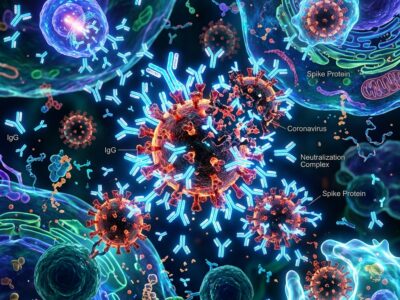
Perhaps the most experimental tool on the horizon is monoclonal antibodies. A single dose of a monoclonal antibody called L9LS, developed by the National Institutes of Health, showed 88 percent efficacy against P. falciparum infection over a six-month malaria season in a phase 2 trial in Mali, published by Kayentao et al. in The New England Journal of Medicine in 2022. If larger trials confirm these results, monoclonal antibodies could become a powerful seasonal prevention tool, particularly for pregnant women and infants who are most vulnerable.
What the evidence says about ending malaria
The scientific consensus, as articulated by the WHO and the Lancet Commission on Malaria Eradication in 2019, is that malaria can be eradicated within a generation, but only with sustained political commitment, increased funding, and equitable access to existing and new tools. The commission, led by Feachem et al., estimated that an additional $2 billion per year in global investment would be needed to accelerate progress toward eradication by 2050.
From a systemic perspective, the hardest part of ending malaria is not developing new tools. It is delivering the tools we already have to the people who need them most. In public health outreach, we consistently see a disconnect between what works in trials and what reaches the last mile. A vaccine that is 75 percent effective in a controlled study is far less effective if it sits in a warehouse because of cold chain failures or funding delays.
Health system strengthening is not glamorous, but it is the foundation. Countries that have eliminated malaria, like Sri Lanka, which received WHO certification as malaria-free in 2016, did so not through a single breakthrough but through decades of investment in surveillance, trained community health workers, and rapid response capacity. Sri Lanka’s success was built on a system that could detect every case, investigate every outbreak, and treat every infection within 24 hours. That level of system performance is what the global strategy demands, and it is what most high-burden countries still lack.
What needs to happen now
For policymakers, the priority is closing the funding gap. Domestic financing for malaria programmes in endemic countries has increased, but it remains insufficient. The Global Fund to Fight AIDS, Tuberculosis and Malaria, which provides roughly 60 percent of international malaria funding, requires sustained donor commitments at its replenishment cycles. The next replenishment, expected in late 2026, will be a critical test of political will.
For researchers, the priority is generating evidence on how to combine new tools effectively. Vaccines plus nets plus chemoprevention plus monoclonal antibodies, deployed together, could drive transmission down faster than any single intervention. But the operational research on how to layer these tools in real-world settings is still thin.
For readers and advocates, the priority is paying attention. Malaria is not a solved problem, but it is a solvable one. The difference between the world we have and the world without malaria is not scientific knowledge. It is the decision to fund, deliver, and sustain the response.
On a recent visit to a district hospital in eastern India, I watched a community health worker explain to a young mother how to use a rapid diagnostic test kit. The mother had walked four hours with her feverish child. The test was positive. The treatment was available. The child recovered. That single interaction, multiplied millions of times, is how malaria ends. Not with a single breakthrough, but with the relentless, unglamorous work of making sure every child has a net, every clinic has a test, and every positive case gets treated. That is what World Malaria Day 2026 should remind us of.
This article is for educational purposes only and does not constitute medical advice, diagnosis, or treatment recommendations. Consult a qualified healthcare provider for any health concerns. See our Medical Disclaimer.
Sources
- World Health Organization. World Malaria Report 2024. Geneva: WHO; 2024. Available at: https://www.who.int/teams/global-malaria-programme/reports/world-malaria-report-2024
- Bhatt S, Weiss DJ, Cameron E, et al. The effect of malaria control on Plasmodium falciparum in Africa between 2000 and 2015. Nature. 2015;526(7572):207-211. PMID: 26375008. DOI: 10.1038/nature15535
- Datoo MS, Dicko A, Tinto H, et al. A phase III randomised controlled trial evaluating the malaria vaccine candidate R21/Matrix-M in African children. The Lancet. 2024;403(10426):533-544. DOI: 10.1016/S0140-6736(23)02511-4
- Hancock PA, Hendriks CJM, Tangena JA, et al. Mapping trends in insecticide resistance phenotypes in African malaria vectors. PLoS Biol. 2022;18(6):e3000633. DOI: 10.1371/journal.pbio.3000633
- Protopopoff N, Mosha JF, Lukole E, et al. Effectiveness of a long-lasting piperonyl butoxide-treated insecticidal net and indoor residual spray, separately and together, against malaria transmitted by pyrethroid-resistant mosquitoes: a cluster, randomised controlled, two-by-two factorial design trial. The Lancet. 2018;391(10130):1577-1588. PMID: 29655496. DOI: 10.1016/S0140-6736(18)30427-6
- Kayentao K, Ongoiba A, Preston AC, et al. Safety and efficacy of a monoclonal antibody against malaria in Mali. N Engl J Med. 2022;387(17):1567-1579. PMID: 36286279. DOI: 10.1056/NEJMoa2206966
- Feachem RGA, Chen I, Akbari O, et al. Malaria eradication within a generation: ambitious, achievable, and necessary. The Lancet. 2019;394(10203):1056-1112. DOI: 10.1016/S0140-6736(19)31139-0

Leave a Comment